ONE-MAN-ONE-SHILLING-ONE-VOTE
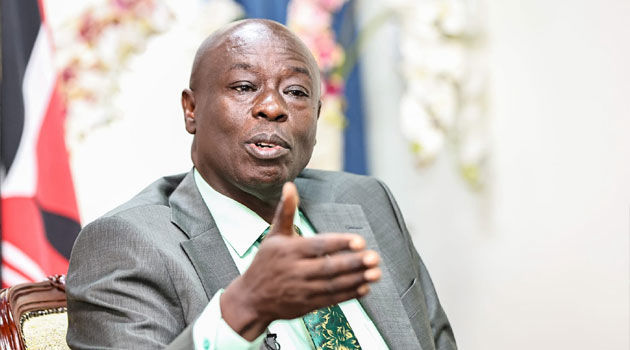
On May 12, 2024 in Embu County, Deputy President Rigathi Gachagua doffed off his gloves, let the cat out of the bag and spoke to what is turning out to be the hot-button issue among a section of the Mt Kenya politicians – the one-man-one-shilling-one-vote mantra. By directly referring to the elephant in the living room, was the embattled DP sabre rattling or taking the bull by its horns?
His unexpected utterances came just five days before the much-hyped Limuru (III) meeting organised on May 17, mainly by the trio of Jeremiah Kioni, Martha Karua and Ndiritu Muriithi, all Azimio coalition members, a coalition whose presidential candidate Raila Odinga was defeated by Ruto. Was Gachagua’s pronouncement a pre-emptive strike? A way of stealing the thunder from his political nemesis or, was he engaging in brinkmanship?
As expected Limuru (III) speakers hyped on the mantra and declared any Mt Kenya leader opposed to the revenue allocation formula was an “enemy of development.” Githunguri MP Gathoni wa Muchomba announced to the crowd that she had proposed in a letter for the formula to be included in the NADCO report, but the letter was supposedly trashed by Kikuyu MP and Majority Leader Kimani Ichung'wah. The bipartisan National Dialogue Committee was formed in September 2023, by President Ruto, after Azimio coalition-led anti-government demonstrations between March and July. At the Limuru (III) jamboree, whipped ethnic emotions reigned supreme than reasoned national passions.
I never want to hear that talk again
Anyway, shortly after the Kenya Kwanza coalition alliance won the August 9, 2022 elections, Mt Kenya newly elected United Democratic Alliance (UDA) MPs met with President Ruto at State House Nairobi. Hoping to catch the President flatfooted, some of the MPs, apparently riding on a crest of a popular wave, after delivering a Ruto win in their region, re-introduced the one man, one shilling, one vote (taboo) subject to the president, who was still settling down. Without mincing words, he downright rebuked them, “I am the one to lead the one man, one shilling, one vote formula when the time comes,” President Ruto is reported to have warned the MPs. “I never want to hear that talk again.” In short, Ruto was telling the MPs – banish the thought.
So, what some of Central Kenya MPs did was to vent their frustrations through vernacular radio and TV talks shows. They also prayed that former Nyeri Woman Rep Priscilla Nyokabi would be appointed Commission on Revenue Allocation (CRA) boss post-Jubilee defeat. With Nyokabi presumably bagging the job, Mt Kenya political elites hoped she would be their voice and therefore canvass for the supremacy of population over geography in resource allocation to their constituencies. She did not get the job. Her Jubilee party which was one of the Azimio coalition partners was caught up in a meaningless, useless feud after the defeat and become vulnerable to coalition politics of machinations post-election loss.
One man, one shilling, one kilometre
The political barons who come from the arid and semi-arid lands (Asals) answer to one man, one shilling, one vote has been curt: One man, one shilling, one kilometre. Their central argument in regard to whether population or geography should determine resource allocation to constituencies countrywide is both historical and political. It is also informed by the fear of losing even the “meagre” monies they are currently receiving, if the formula was to be effected. But that is a theme we shall not delve into now. At the appropriate we will revisit the issue.
As the debate spills into the open and as it now becomes the rallying call of Mt Kenya politicians across the political spectrum, going forward; we provide context for a mantra that could as well divide a restless Mt Kenya region into protagonists and antagonists as they clamour for attention in a political landscape wrought with innuendo and infighting.
Ethnic fault lines
Former President Uhuru Kenyatta was behind the one-man-one-vote-one-shilling mantra among a section of central Kenya politicians that cleverly dovetailed into the controversial counties’ allocation revenue bill of 2020. The bill which became acrimonious, further dividing an already fractious ruling Jubilee Party, was severely opposed by the Senate house, led by some of the president’s closest loyalists.
After a lot of haggling, back and forth manoeuvres, horse-trading, bribes and all, the revenue bill squabbles were finally settled on September 17, 2020. The senators, 41 of them, ultimately agreed, after the 10th attempt, in a final showdown that the disbursement should remain the same just like the amount given in the financial year 2019/2020. The remittances by the national treasury to the counties for 2019/2020 fiscal year then stood at KSh316 billion. The total proposed budget for the financial year 2024/2025 is KSh3.9 trillion. The National Assembly and the Senate have agreed on an equitable share of KSh400.1 to the counties.
The eventual armistice among the senators and a sigh of relief among Kenyans was billed as a win-win for all. “Had the bill passed the way it was originally crafted, it would have divided Kenyans even further, re-igniting mutual suspicions and pitting communities against each other, by opening old wounds presumably buried under the guise of national peace and development. The bill was going to be a recipe for creating even more fissures in the ethnic fault lines that make the Kenyan politics,” said a former senator who had opposed the bill from the word go.
“The architect of the bill was President Uhuru,” said a former Jubilee Party MP who was aligned to the President’s Kieleweke faction that was diametrically opposed to Deputy President William Ruto’s Tanga Tanga faction. These two antagonist formations were as a result of the emerging friction within the ruling Jubilee party in President Uhuru’s lame duck second term. Kieleweke, Kiswahili for it shall (soon) be evident was led by former Nyeri MP Ngunjiri Wambugu, while Tanga Tanga, which translates to, a roving group or mob, was led by Ruto.
A jilted Uhuru
“Jilted and snubbed by his backyard, Uhuru tried every tactic and trick that would help him woe central Kenya region back to his fold. He hoped to rekindle the political romance he once enjoyed with the people. The President was frantic, and time was not on side.”
But in August 2020, while issuing title deeds to Embakasi Ranching scheme plot owners, at Kenyatta International Convention Centre (KICC), President Uhuru cautioned politicians against dragging his name into the hotly contested revenue bill. “Do not pull me into the senate debate . . .that was not my formula, its CRA’s (Commission on Revenue Allocation), said the former president.
The genesis and rationale behind the original bill was that some of the central Kenya and Nairobi counties deserve more of the national pie, because of their big population densities. The argument being the current disbursement to these counties did not correctly reflect the corresponding settlement. “The truth of the matter was that President Uhuru hoped to recreate the love affair he once enjoyed with Central Kenya, through the introduction of the bill. But with a recalcitrant electorate, Uhuru couldn’t push his political agenda,” explained the former MP.
“Marginalised” Central Kenya
The MP said the Kikuyu people turned their back on Uhuru soon after he shook hands with Raila Odinga, his erstwhile political nemesis on March 9, 2018. The handshake immediately bore Building Bridges Initiative (BBI), which in two years time, would generate more heat than light.
Part of the Kenyan populace could not fail to link the introduction of the revenue bill with the theme of a supposedly “marginalised” central Kenya that has been “starved” off their rightful allocation share. “The spectre of the ‘Kikuyu Question’ in Kenya’s post-independence ethnic politics seemed to rear it head once more,” said the former MP. “But one thing is for sure, the hatred for the Kenyatta family by Kikuyus had gone grassroots.”
In September 2020, Rachel Shebesh, the Chief Administrative Secretary (CAS) for Public Service and Gender while in Kiambu County said; “The next time we shall have a Kikuyu President will be a long time coming. We shall become more secure when the one man, one shilling, one vote, becomes law no matter who becomes the president.” Speaking at the same event, the then Kiambu County Women Representative, Gathoni wa Muchomba said, “the national cake should be shared based on population and not on land mass and it should dawn on those opposed to the parameters that revenue is collected from people and not forests.”
Johnstone Sakaja then Nairobi Senator and Yusuf Haji, the aging bureaucrat and Garissa senator vociferously opposed the bill, leading Haji to state, “if the bill passes I will resign as the chairman of BBI.” The ailing Haji was a career administrator, remembered as the hawkish district commissioner (DC) and provincial commissioner (PC) under Mzee Jomo Kenyatta and Daniel arap Moi. “The revenue bill was not part of the BBI negotiations,” said Haji.
Haji’s opposition to the revenue scheme wasn’t just about the bill not being part of the BBI agenda, but a question of state resource allocation and its implication for the arid and semi-arid lands (Asals) where majority of the Somali people hail from. If the bill was to be passed in situ, some of the counties that would have had their allocations chopped off from the national treasury would have included northern Kenya counties such as Isiolo, Mandera and Wajir.
In total, 19 counties were to have lost their slated revenue share: Wajir county, for instance would have lost KSh2 billion. Other counties that would have had their share sliced included, Marsabit and Vihiga. Said a former senator, “how would we have explained to our people what’s going on? How would we have told them why we are taking away even the-not-enough money that is disbursed to them?
Sakaja, broke ranks with his friend President Uhuru, by rallying fellow senators to oppose the bill and posing as a conciliator and putting forth a moral and ethical argument: No county should lose its revenue allocation for whatever reason. The Nairobi Senator proposed that the KSh316 billion be increased and then leverage the money that has been added so that no county loses its nominal share. That way, every county would be a winner. Sakaja’s own suspicions of BBI were all the signs he needed to begin extricating himself from President Uhuru in his second term.
Although Sakaja and Haji were the public face of the opposition to the revenue bill, “behind the scenes, realpolitik was at play. “Then Deputy President William Ruto was at the core of fighting the bill ensuring it didn’t make it to the floor of the house,” said the former senator. “Through his trusted henchman the Elgeyo Marakwet Senator Kipchumba Murkomen, he scuttled the president’s efforts of appeasing his disgruntled Kikuyus.”
Murkomen’s revenge
Murkomen was the perfect person to do the DP’s bidding: The humiliation of being unceremoniously yanked out of a plum position in the senate because of the widening rift within the ruling Jubilee Party was still fresh. He had been the senate Majority Leader – 2013 to May 2020. Together with the recently married Susan Kihika, then Nakuru Senator and the former senate’s Majority Chief Whip and Kindiki Kithure, then Tharaka Nithi Senator and former deputy speaker, senate, all known Ruto’s supporters, they had been shown the door.
“As luck would have it, Njee Muturi, a State House operative, went looking for Murkomen,” said a close friend of Murkomen. The friend told me Njee’s job was to bribe the senators with KSh5 million to vote for the bill. He said Njee allegedly stashed millions of shillings in the boot of his car and hoped to ensnare senators he thought were susceptible.
Njee’s specific instructions to look for Murkomen were instructive: “Murkomen was good at his job as a Majority Leader – he knew how to canvass among the senators: If his bosses, Uhuru and Ruto wanted the senators galvanised for a government cause, he ably did it,” said the friend. “Since 2013 up to the time of the handshake, March 2018, the government had not lost any motion, thanks to Murkomen.” Now the government wanted his help. Murkomen, with the help of his mentor William Ruto saw a perfect opportunity to settle scores.
When Njee approached Murkomen with KSh5 million offer, he allegedly turned it down, told Njee to keep his money. “OK then,” retorted a miffed Njee: “We’ll meet at the floor of the house and I can assure you, we’ll have the numbers.”
The bait for Murkomen to lend his mobilising skills to the Jubilee Party faction that had humiliated him, by giving his senate job to a rival, went beyond the allegedly KSh5 million bribe. He was told that counties in the Rift Valley region where he comes from would actually benefit from the bill’s passage. His small county Elgeyo Marakwet, would for example get an extra KSh500 million, Uasin Gishu County would get an extra KSh800 million and Nandi County would get an extra KSh1.4 billion.
Even after the senators had allegedly been bribed, it is evident they did not do the State House bidding. “The Jubilee Party had 28 elected senators, an absolute majority, still the government could not pass the bill,” said Murkomen’s friend. “The President did not meet us to discuss the bill, how did he expect us to just vote for it?”
With Ruto pulling the strings behind the scenes, Murkomen was the front man mobilising the senators by persuading them to vote against the bill. “On the sixth attempt, Murkomen mobilised the senators to defeat the motion by 34–21 votes. But on the seventh attempt, Murkomen quickly did his mathematics and realised some of his troops would be compromised so he unleashed his hidden card – he moved a motion of adjournment.”
On October 8, 2020, President Uhuru signed into law the County Revenue Allocation Bill, which increased the total amount to KSh369.8 billion.
As to whether the one-man-one-shilling-one-vote mantra is being driven by other considerations, other than solely a desire to revitalise equitable and shareable resource allocation, or a ruse to stir the base by the Mt Kenya political elite ahead of 2027, is a subject matter we will return to in due course.