KIKUYU HEGEMONY AND CONTROL OF THE STATE
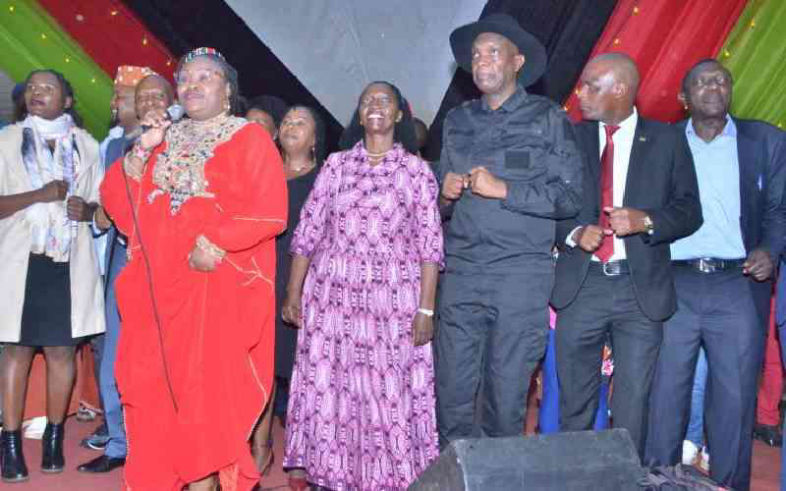
A meeting organised by a section of the Kikuyu political elites dubbed Limuru (III) on May 17, 2024, came and went. The choice of the meeting place and labelling of the meeting as Limuru (III) was deliberate and intentional and certainly meant to evoke ethnic chauvinism and passion. For what purpose and why? The two preceding Limuru conferences were about Kikuyu hegemony and control of the state.
The original Limuru (I) was held in 1966, just three years after Kenya gained political independence from the British. It was a delegates’ conference whose architects were the ruling Kanu party Kikuyu mandarins. Their mission? To dehorn and trim the Vice-President’s power. Jaramogi Oginga Odinga who was the VP had carved a different political trajectory and the emerging Kiambu Mafia that threw an impenetrable ring around the elderly President Jomo Kenyatta got pissed off and agitated. They interpreted Jaramogi’s move as leading to a gradual capture of state power which they had arrogated to themselves.
The taming of the shrew
Nobody was going to threaten their nascent stranglehold on presidential power. The nationalist Jaramogi had to be stopped. So, they came up with an ingenious idea of splitting the VP position into seven mini positions to reflect the seven provinces minus Nairobi that made up the Kenyan state. “The meeting was organised by Jesse Gachago, then the organising secretary of the ruling party Kanu”, 78-year-old Njagi told me. “I was 20-years-old and an ‘A’ level student and the meeting was for taming Jaramogi by Kiambu Mafia, who had sworn the presidency was theirs for the keeps. It was a purely ethnic Kikuyu affair.” Gachago was the first post-independent MP for Makuyu in Murang’a. In 1977, he ran afoul of the powerful Attorney General, “Sir” Charles Mugane Njonjo, who orchestrated his jailing, ostensibly for smuggling coffee.
Three years later, after Limuru (I) in 1966, mass oath-taking of Kikuyus started: The epicentre of these ritualistic blood-drinking oaths and sacrificial lambs were being held at Jomo’s ancestral home – Ichaweri, Gatundu in Kiambu. Mbugwa Katani 76, was 21-year-old in 1969 and working in Miritini, down at the Coast region as a road constructor. “I was rounded up by some Kikuyu men and taken to State House, Mombasa. There, I met gun-wielding policemen, who shoved me into some room and with others, forced to take an oath that I shall defend my ruriri (tribe) against people intent on grabbing our presidential power,” Mbugwa reminisced recently.
Remember Ocampo Six? Then Bensouda Three
The second Limuru meeting was held in March 2012; the month of March was not a mere coincidence – the first Limuru meeting was held between March 12–13. The meeting was coming on the backdrop of “Ocampo Six” and a forthcoming presidential election slated that year, but that was pushed to March 4, 2013. What was Ocampo Six? On December 15, 2010, International Criminal Court (ICC) former lead prosecutor, the Argentine Louis Moreno Ocampo fingered six Kenyans as having been involved in the post-election violence (PEV) that rocked the country, just after the controversial 2007 elections.
They were: The current president William Ruto, the former President Uhuru Kenyatta, former Head of the Civil Service Francis Muthaura, former Police Commissioner, Maj Gen (Rtd) Hussein Ali, former Tinderet MP Henry Kosgey and diminutive Kass Radio presenter, Joshua Sang. Kass Radio was a Kalenjin vernacular radio station. To cut a long story short, the Ocampo Six was reduced to “Bensouda Three”: Uhuru, Ruto and Kosgey. They were now referred to as Bensouda Three, because the Argentine had retired and the Gambian lawyer, Fatou Bensouda had taken over.
Limuru (III) was organised by August 2022 losers
“The Limuru (II) meeting was very clear in its agenda, which was only one – to install Uhuru Muigai Kenyatta as the Gema presidential candidate,” said one of the chief organisers of the meeting. “All other Gema presidential candidates were null and void as per the Limuru (II) declaration.” Apart from categorically confirming Uhuru as the presidential torch bearer of the March, 2013 general election, “it also mandated him to pick his chosen running mate – whom we already knew – but who wasn’t publicly pronounced at the meeting.”
The Limuru (II) had one departure from Limuru (I) – it was not a purely Kiambu Mafia affair. It is the association of the Gikuyu, Embu and Meru; Gema that helped Uhuru Kenyatta at the Limuru (II) meeting, when its leadership agreed to attend the meeting and give a stamp of approval to the meeting’s agenda; that of installing Uhuru as the sole spokesman of the Mt Kenya region,” said my organiser friend. Gema was formed in March 1971 by Njenga Karume, a then Kiambu tycoon later politician and a member of parliament.
Limuru meetings are about ethnic chauvinism, they are about capturing state power, they are about identifying a Kikuyu candidate for the presidency, said my interlocutor. “So, let us not beat about the bush; Limuru meetings are not about discussing socio-economic problems or the politics of the day; their agenda is very specific: identify an ethnic kingpin, rally around him and vote for him en-masse. I was invited for Limuru (III) but I didn’t attend. I was lost as to what its real agenda was.” He also didn’t attend because, “the meeting was organised by (bitter) August 2022 Azimionite election losers.”
Uhuru’s bellicose politics
The Gema leadership also kept off the meeting. It had also been invited but after deliberating on the merits and demerits of the meeting, it declined the invitation. “The meeting was premature, directionless, ill-conceived and ill-informed. We won’t be drawn into the politics of bitterness and disgruntled losers,” one of the mzee whispered to me. “I hear they have said they will hold subsequent Limuru meetings. Without Gema support, they are going nowhere. Did you identify notable Mt Kenya leaders there, other than lightweight sore losers? We’ll not be part of politics of sabre rattling and subterfuge”. The mzee told me Uhuru’s bellicose politics of anger will not do.
Ideally, the Limuru (III) was meant to have been held by April 2020, said the mzee. “It would have charted the way forward for the Mountain post-Uhuru Kenyatta presidency. What the meeting would have done is to pick a Gema candidate for the August 2022 elections. But Uhuru had already gone to bed with Raila Odinga and he could hear none of it.”
Uhuru Kenyatta reportedly bankrolled Limuru (III). That is why the meeting quickly made him its de facto spokesman. I asked one of the attendees why they named the former president their spokesman in absentia. “Uhuru has yet to hand over the tribal baton to another Kikuyu leader, what he did was to hand over the presidential sword to Ruto, but he is still the ethnic kingpin, in our view.” This certainly is a stab at Gachagua’s claim to being the senior most Kikuyu leader by virtue of his DP position.
What is the ultimate aim of these purported Limuru jamborees? This is a theme that we will be examining in the coming days as we unravel the subtle sub-plots at play.